Федеральное государственное бюджетное учреждение науки Новосибирский институт органической химии им. Н.Н. Ворожцова Это старая версия сайта! Новый сайт https://web3.nioch.nsc.ru/nioch/
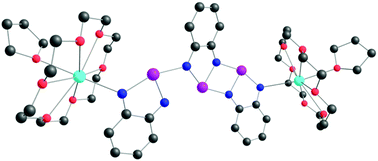
Reduction of 2,1,3-benzotelluradiazole (3) yielded a crystalline solid that features a trimeric dianion formally composed of two [3]˙− and one 3 bridged by unusually asymmetric Te⋯N chalcogen bonds. The solid is diamagnetic due to strong antiferromagnetic coupling, as revealed by CASSCF/CASPT2 and BS-DFT.
В журнале Physical Chemistry Chemical Physics, Vol. 22, Iss. 3, 1019-1026, 2020 (IF 3,567) опубликована статья с участием сотрудников Института: А.А. Кужелева, В.М. Тормышева, О.Ю. Рогожниковой, М.В. Еделевой и Е.Г. Багрянской
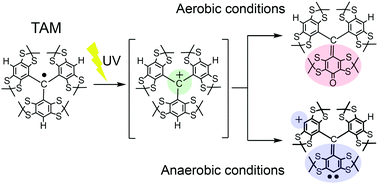
Photochemistry of tris(2,3,5,6-tetrathiaaryl)methyl radicals in various solutions
Andrey A. Kuzhelev, Victor M. Tormyshev, Victor F. Plyusnin, Olga Yu. Rogozhnikova, Mariya V. Edeleva, Sergey L. Veber and Elena G. Bagryanskaya
Physical Chemistry Chemical Physics, Vol. 22, Iss. 3, 1019-1026, 2020 First published: 11 December 2019
During the last decades, persistent tris(2,3,5,6-tetrathiaaryl)methyl radicals (TAMs) have attracted much attention due to their applications in oximetry, EPR tomography, and as spin labels in pulsed dipolar EPR spectroscopy. Recently, researchers proposed to use TAM radicals as spin labels and/or a partner for photoinduced spin labels. Thus, the questions of their photochemical stability and mechanism of degradation under UV irradiation have become relevant and important. In this study, steady-state photolysis and flash photolysis of TAM radicals were investigated. A detailed mechanism of TAM phototransformations was proposed and confirmed by NMR, gel permeation chromatography, and mass-spectrometric analyses of the products.
В журнале Chemical Communications, Vol. 56, Iss. 5, 727-730, 2020 (IF 6,164) опубликована статья с участием сотрудников Института: А.Ю. Макарова, Ю.М. Волковой, Л.А. Шундрина, И.Г. Иртеговой, И.Ю. Багрянской, А.В. Зибарева
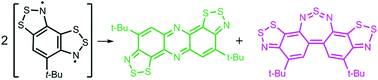
Chemistry of Herz radicals: a new way to near-IR dyes with multiple long-lived and differently-coloured redox states
Alexander Yu. Makarov, Yulia M. Volkova, Leonid A. Shundrin, Alexey A. Dmitriev, Irina G. Irtegova, Irina Yu. Bagryanskaya , Inna K. Shundrina, Nina P. Gritsan, Jens Beckmann and Andrey V. Zibarev
Chemical Communications, Vol. 56, Iss. 5, 727-730, 2020 First published: 04 December 2019
A new synthetic methodology based on the self-condensation of 1,2,3-benzodithiazolyl diradicals (Herz radicals) produces unprecedented 5-6-6-6-5 and 5-6-7-6-5 pentacyclic sulfur-nitrogen near-IR dyes featuring up to five multiple long-lived and differently coloured redox-states.
В журнале Chemistry - A European Journal Volume 25, Issue 3, January 21, 2019, Pages 806-816 (IF=5,16) опубликован статья с участием сотрудников Института Е.А. Чулановой, д.х.н. Л.А. Шундрина, Г.Е. Сальникова, к.х.н. А.М. Генаева, к.х.н.И.Г. Иртеговой, д.х.н. И.Ю. Багрянской, д.х.н. А.В. Зибарева
Radical Anions, Radical‐Anion Salts, and Anionic Complexes of 2,1,3‐Benzochalcogenadiazoles
Dr. Nikolay A. Pushkarevsky, Elena A. Chulanova, Prof. Dr. Leonid A. Shundrin, Dr. Anton I. Smolentsev, Dr. Georgy E. Salnikov, Dr. Elena A. Pritchina, Dr. Alexander M. Genaev, Dr. Irina G. Irtegova, Prof. Dr. Irina Yu. Bagryanskaya, Prof. Dr. Sergey N. Konchenko, Prof. Dr. Nina P. Gritsan, Prof. Dr. Jens Beckmann, Prof. Dr. Andrey V. Zibarev
Volume25, Issue3, January 14, 2019, Pages 806-816 First online: 15 January 2019
By means of cyclic voltammetry (CV) and DFT calculations, it was found that the electron‐acceptor ability of 2,1,3‐benzochalcogenadiazoles 1–3 (chalcogen: S, Se, and Te, respectively) increases with increasing atomic number of the chalcogen. This trend is nontrivial, since it contradicts the electronegativity and atomic electron affinity of the chalcogens. In contrast to radical anions (RAs) [1].− and [2].−, RA [3].− was not detected by EPR spectroscopy under CV conditions. Chemical reduction of 1–3 was performed and new thermally stable RA salts [K(THF)]+[2].− (8) and [K(18‐crown‐6)]+[2].− (9) were isolated in addition to known salt [K(THF)]+[1].− (7). On contact with air, RAs [1].− and [2].−underwent fast decomposition in solution with the formation of anions [ECN]−, which were isolated in the form of salts [K(18‐crown‐6)]+[ECN]− (10, E=S; 11, E=Se). In the case of3, RA [3].− was detected by EPR spectroscopy as the first representative of tellurium–nitrogen π‐heterocyclic RAs but not isolated. Instead, salt [K(18‐crown‐6)]+2[3‐Te2]2− (12) featuring a new anionic complex with coordinate Te−Te bond was obtained. On contact with air, salt 12 transformed into salt [K(18‐crown‐6)]+2[3‐Te4‐3]2− (13) containing an anionic complex with two coordinate Te−Te bonds. The structures of 8–13 were confirmed by XRD, and the nature of the Te−Te coordinate bond in [3‐Te2]2− and [3‐Te4‐3]2− was studied by DFT calculations and QTAIM analysis.
На сайте журнала Chemistry - A European Journal (IF=5,16) опубликована статья с участием сотрудников Института В. Тормышева, Д. Трухина, О. Рогожниковой, А. Спицыной, А. Кужелева, Е.Г. Багрянской
Methanethiosulfonate Derivative of OX063 Trityl: a Promising and Efficient Reagent for SDSL of Proteins
Victor Tormyshev, Alexey Chubarov, Olesya Krumkacheva, Dmitry Trukhin, Olga Rogozhnikova, Anna Spitsina, Andrey Kuzhelev, Vladimir Koval, Matvey Fedin, Tatyana Godovikova, Michael Bowman, Elena G. Bagryanskaya
Chemistry - A European Journal, 2020, V. 26, N 12, Pp 2705-2712 First published 18 December 2019
Trityl radicals or TAMs have appeared recently as an alternative source of spin labels for measuring long distances in biological systems. Finland trityl radical (FTAM) served as the basis for this new generation of spin labels, but FTAM is rather lipophilic and is susceptible to self‐aggregation, to non‐covalent binding with lipophilic sites of proteins, and to non‐covalent docking at the termini of duplex DNA. In this paper we use the very hydrophilic OX063 TAM with very‐low toxicity and little tendency for aggregation as the basis for a spin label. Human serum albumin (HSA) labeled with OX063 has an intense, narrow line typical of TAM radicals in solution while HSA labeled with FTAM has broad lines and extensive aggregation . In pulse EPR measurements, the measured T M for HSA labelled with OX063 is 6.3 μs at 50 K, the longest yet obtained with a TAM‐based spin‐label. The lowered lipophilicity also decreases side products in the labelling reaction.
На сайте журнала Journal of Ethnopharmacology (IF=3,414) опубликована статья с участием сотрудников Института Е.Е. Шульц, Т.Н. Петровой, Т.В. Рыбаловой, Т.С. Фроловой
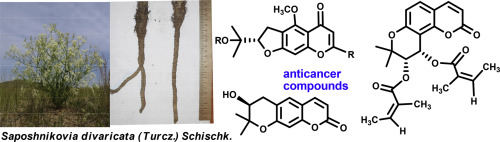
Chromones and coumarins from Saposhnikovia divaricata (Turcz.) Schischk. Growing in Buryatia and Mongolia and their cytotoxicity
B.M. Urbagarova, E.E. Shults, V.V. Taraskin, L.D. Radnaeva, T.N. Petrova, T.V. Rybalova, T.S. Frolova, A.G. Pokrovskii, Ja. Ganbaatar
Journal of Ethnopharmacology, Available online 10 January 2020, 112517
Saposhnikovia divaricata (family Apiaceae) a traditional medicinal plant distributed in many provinces of China, is well known for the pharmaceutical value and has been used for rheumatic arthritis, and anxiety in children. Antiviral, antioxidant and antiproliferative activities were also mentioned. The application of this plant are recorded in the Chinese Medicine (CM) classical text the Shen Nong's Materia Medica (Shen Nong Ben Cao Jing). In this monograph S. divaricata (syn RadixLedebouriella divaricata) is graded as a premium-grade herb, with their broad-spectrum of therapeutic applications for the treatment of cough, common cold, arthralgia, as well as in rheumatic disorders.
Aim of the study
To isolate and identify chemical constituents (chromones and coumarins) from S. divaricata, collected in Buryatia and Mongolia and to study their in vitro anticancer activity against MEL-8, U-937, DU-145, MDA-MB-231 and ВТ-474 cell lines.
Materials and methods
An 40% aqueous ethanol extract of the roots of S. divaricata was prepared and further successively fractionated by extraction with petroleum ether, diethyl ether,tert-butyl methyl ether and ethyl acetate. The obtained extracts were subjected to a series of chromatographic separations on silica gel for isolation of individual compounds. Isolated compounds were tested for their cytotoxicity with respect to model cancer cell lines using the conventional MTT assays. Results: Total of 15 individual compounds: coumarins scopoletin 2, bergapten 3, isoimperatorin 4, marmesin 5, (+)-decursinol 9, (−)-praeruptorin B 10, oxypeucedanin hydrate 11, chromones: hamaudol 6, cimifugin 7, 5-О-methylvisamminol 8, chromone glycosides: prim-O-glucosylcimifugin 12, sec-O-glucosylhamaudol 13, 4′-O-β-D-glucopyranosyl-5-О-methylvisamminol 14, 4′-O-β-D-glucopyranosylvisamminol (15) and also polyyne compound panaxinol 1 were isolated and characterized. The structure of dihydropyranocoumarin 10 was confirmed by X-ray diffraction analyses. HPLC-UV method was used for determination of the content of most abundant chromones 7, 12 and 14 in the roots of S. divaricata, collected in Mongolia. Compounds 3–11 and 13, 14 were evaluated for their cytotoxicity with respect to model cancer cell lines. All the compounds were non-toxic in the hemolysis test. Conclusion: This report about the phytochemical profiles of S. divaricata growing in Mongolia and Buryatia led to the identification of 14 compounds including coumarins and chromones. The available coumarins and chromones may serve as new leads for the discovery of anticancer drugs.
На сайте журнала Dalton Transactions (IF 4,052) опубликована статья с участием сотрудников Института д.х.н. И.И. Олейника (внс ЛЭАСМ), к.х.н. И.В. Олейник (снс ЛЭАСМ):
Probing the effect of ortho-cycloalkyl ring size on activity and thermostability in cycloheptyl-fused N,N,N-iron ethylene polymerization catalysts
Jingjing Guo, Wenjuan Zhang, Ivan I. Oleynik, Gregory A. Solan, Irina V. Oleynik,Tongling Liang and Wen-Hua Sun
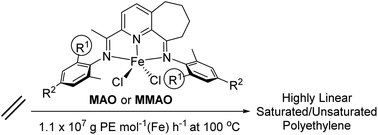
The syntheses of six bis(imino)-5,6,7,8-tetrahydrocycloheptapyridine-iron(II) chloride complexes, [2-{(Ar)NCMe}-9-{N(Ar)}C10H10N]FeCl2 (Ar = 2-(C5H9)-6-MeC6H3Fe1, 2-(C6H11)-6-MeC6H3Fe2, 2-(C8H15)-6-MeC6H3Fe3, 2-(C5H9)-4,6-Me2C6H2Fe4, 2-(C6H11)-4,6-Me2C6H2Fe5, 2-(C8H15)-4,6-Me2C6H3Fe6), are reported in which the ring size of the ortho-cycloalkyl group has been varied as has the type of para-substituent. The molecular structures of Fe3 and Fe6 reveal square pyramidal geometries at iron while the ortho-cyclooctyl rings adopt boat-chair conformations. On treatment with either methylaluminoxane (MAO) or modified methylaluminoxane (MMAO), all six complexes showed optimal activities at 80 °C [up to 1.9 × 10⁷ g of PE per mol Fe per h for Fe5/MMAO] for ethylene polymerization forming linear polyethylene (Tm's > 126 °C). Notably, the catalytic activities showed a marked correlation with the ring size of the ortho-cycloalkyl substituent: cyclohexyl (Fe2 and Fe5) > cyclooctyl (Fe3 and Fe6) > cyclopentyl (Fe1 and Fe4) for either para-substituent, H or Me. Furthermore, this family of iron catalysts exhibited remarkable thermostability by remaining highly active even at temperatures as high as 100 °C (1.1 × 10⁷ g of PE per mol Fe per h); the wide variation in polymer molecular weights (Mw: 2.4–166 kg mol−1), influenced through choice of precatalyst and co-catalyst as well as by temperature and pressure, further highlights the versatility of these catalysts.
Photoremovable protective groups (PPGs) and related “caged” compounds have been recognized as a powerful tool in an arsenal of life science methods. The present review is focused on recent advances in design of “caged” compounds which function in red or near-infrared region. The naive comparison of photon energy with that of organic bond leads to the illusion that long-wavelength activation is possible only for weak chemical bonds like N-N. However, there are different means to overcome this threshold and shift the uncaging functionality into red or near-infrared regions for general organic bonds. We overview these strategies, including the novel photochemical and photophysical mechanisms used in newly developed PPGs, singlet-oxygen-mediated photolysis, and two-photon absorption. Recent advances in science places the infrared-sensitive PPGs to the same usability level as traditional ones, facilitating in vivo application of caged compounds.
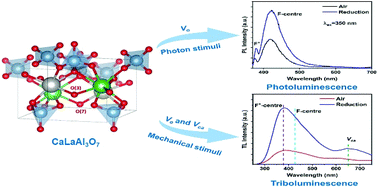
In this work, a layered melilite structure, CaLaAl3O7, was synthesized and observed to have obvious luminescence behaviors under the stimuli of ultraviolet light and rubbing, which were called photoluminescence and triboluminescence, respectively. Considering the wide bandgap of CaLaAl3O7 and its specific crystal structure, the observed luminescence should be attributed to intrinsic defects. Both the photoluminescence and triboluminescence of CaLaAl3O7> show a strong dependence on the synthesis atmosphere, suggesting that they should be related to the oxygen vacancy. It is attractive to find that the triboluminescence of CaLaAl3O7 shows a distinct spectral characteristic compared to its photoluminescence. Further computational results suggest that the applied mechanical stimuli on the CaLaAl3O7 cell could promote the formation of the vacancies of oxygen and calcium, responsible for the spectral differences.
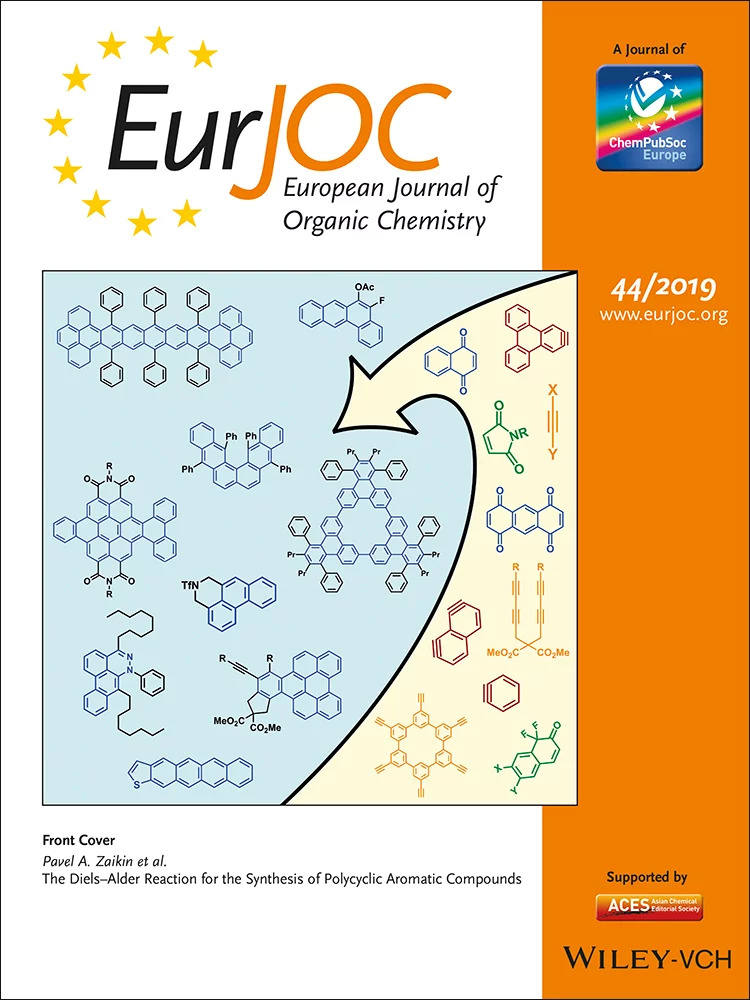
В журнале European Journal of Organic Chemistry (IF 3.029) опубликован мини-обзор с участием сотрудников Института: к.х.н. Дян Ок Тон (нс ЛФ), д.х.н. Г.И. Бородкина (гнс ЛФИ) и Р.А. Заикина (мнс ЛФ)
The Diels–Alder Reaction for the Synthesis of Polycyclic Aromatic Compounds
Abstract
Polycyclic aromatic compounds (PACs) represent a class of molecules consisting of two or more condensed aromatic rings. They are currently of great interest as potential semiconducting materials for organic field‐effect transistors, light‐emitting diodes, and solar panels. Substituted PACs are not always readily available and may require complicated multi‐step synthetic procedures to be obtained. One of the promising methods of the synthesis of functionalized PACs is the assembly of polycyclic backbones from substituted building blocks via cycloaddition reactions, in particular, the Diels–Alder reaction. In this minireview we aimed to cover the recent progress in the application of the Diels–Alder reaction in PACs synthesis with the emphasis on the structures of dienophiles. While quinones and arynes still act most frequently as the dienophilic components, other dienophiles with activated double and triple carbon–carbon bonds attract attention due to the ability of insertion of functional groups into polycyclic structures. In the recent decade variants of Dehydro Diels–Alder reaction, especially HexaDehydro Diels–Alder reaction (HDDA) attract much attention leading to the formation of polycyclic structures in a single step. The present review covers mostly papers published during the past decade; older works are referenced only when it is necessary for the understanding of the results discussed.
На сайте журнала Nucleic Acids Research (IF 11,147I) опубликована статья с участием сотрудников Института :
Exploring the interactions of short RNAs with the human 40S ribosomal subunit near the mRNA entry site by EPR spectroscopy
Alexey A Malygin, Olesya A Krumkacheva, Dmitri M Graifer, Ivan O Timofeev, Anastasia S Ochkasova, Maria I Meschaninova, Alya G Venyaminova, Matvey V Fedin, Michael Bowman, Galina G Karpova, Elena G Bagryanskayaa
Nucleic Acids Research, Volume 47, Issue 22, 16 December 2019, Pages 11850–11860 First published: 14 Nov 2019
The features of previously unexplored labile complexes of human 40S ribosomal subunits with RNAs, whose formation is manifested in the cross-linking of aldehyde derivatives of RNAs to the ribosomal protein uS3 through its peptide 55–64 located outside the mRNA channel, were studied by EPR spectroscopy methods. Analysis of subatomic 40S subunit models showed that a likely site for labile RNA binding is a cluster of positively charged amino acid residues between the mRNA entry site and uS3 peptide 55–64. This is consistent with our finding that the 3′-terminal mRNA fragment hanging outside the 40S subunit prevents the cross-linking of an RNA derivative to this peptide. To detect labile complexes of 40S subunits with RNA by DEER/PELDOR spectroscopy, an undecaribonucleotide derivative with nitroxide spin labels at terminal nucleotides was utilized. We demonstrated that the 40S subunit channel occupancy with mRNA does not affect the RNA derivative binding and that uS3 peptide 55–64 is not involved in binding interactions. Replacing the RNA derivative with a DNA one revealed the importance of ribose 2′-OH groups for the complex formation. Using the single-label RNA derivatives, the distance between the mRNA entry site and the loosely bound RNA site on the 40S subunit was estimated.
В журнале ACS Chemical Neuroscience (IF 3,861) опубликована статья с участием сотрудников Института: к.х.н.О.В. Ардашова (снс ЛФАВ), к.б.н. А.В. Павловой (нс ЛФИ), к.б.н. Е.А. Морозовой (снс ЛФИ) , к.х.н. Д.В. Корчагиной (нс ГЯМР), Г.Е. Сальникова (снс, ГЯМР), к.х.н. А.М. Генаева (снс ЛМР), к.х.н. О.С. Патрушевой (нс ЛФАВ), Н. С. Ли-Жуланова (мнс ЛНТПС), д.б.н. Т.Г. Толстиковой (завлаб ЛФИ), д.х.н. К.П. Волчо (гнс ЛФАВ), д.х.н. Н.Ф. Салахутдинова (зав отделм ОМХ)
A Novel Small Molecule Supports the Survival of Cultured Dopamine Neurons and May Restore the Dopaminergic Innervation of the Brain in the MPTP Mouse Model of Parkinson’s Disease
Oleg V. Ardashov, Alla V. Pavlova, Arun Kumar Mahato, Yulia Sidorova, Ekaterina A. Morozova, Dina V. Korchagina, Georgi E. Salnikov, Alexander M. Genaev, Oksana S. Patrusheva, Nikolay S. Li-Zhulanov, Tat’yana G. Tolstikova, Konstantin P. Volcho, Nariman F. Salakhutdinov
ACS Chemical Neuroscience, 2019, 10, 10, 4337-4349
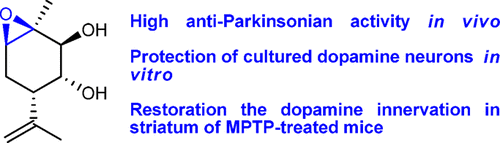
We previously showed that monoterpenoid (1R,2R,6S)-3-methyl-6-(prop-1-en-2-yl)cyclohex-3-ene-1,2-diol 1 alleviates motor manifestations of Parkinson’s disease in animal models. In the present study, we designed and synthesized monoepoxides of (1R,2R,6S)-3-methyl-6-(prop-1-en-2-yl)cyclohex-3-ene-1,2-diol 1 and evaluated their biological activity in the MPTP mouse model of Parkinson’s disease. We also assessed the ability of these compounds to penetrate the blood–brain barrier (BBB). According to these data, we chose epoxide 4, which potently restored the locomotor activity in MPTP-treated mice and efficiently penetrated the BBB, to further explore its potential mechanism of action. Epoxide 4 was found to robustly promote the survival of cultured dopamine neurons, protect dopamine neurons against toxin-induced degeneration, and trigger the mitogen-activated protein kinase (MAPK) signaling cascade in cells of neuronal origin. Meanwhile, neither the survival-promoting effect nor MAPK activation was observed in non-neuronal cells treated with epoxide 4. In the MPTP mouse model of Parkinson’s disease, compound 4 increased the density of dopamine neuron fibers in the striatum, which can highlight its potential to stimulate striatal reinnervation and thus halt disease progression. Taken together, these data indicate that epoxide 4 can be a promising compound for further development, not only as a symptomatic but also as a neuroprotective and neurorestorative drug for Parkinson’s disease.